Your situation
Nursing-home help for immigrant families
Choosing a nursing home or skilled-nursing facility for a parent or relative is hard—especially when you’re navigating a new system. Northhaven Care is a free matching + information service to help you compare care, ratings, and costs in your language.
You’re not alone—immigrant families have options
A nursing home decision is often urgent after a hospital discharge. It’s normal to feel stressed, overwhelmed, or unsure what “good care” looks like.
Northhaven Care is a FREE service that helps families in the US compare nursing homes and skilled-nursing facilities using reliable public information (like Medicare’s Care Compare) and understand typical cost planning. We’re not a care provider, a government program, or a placement agency, and we don’t give medical or legal advice.
It’s also important to know that help for nursing-home care is generally based on the person’s care needs and financial eligibility rules—not on immigration status alone. Families can often get language assistance and guidance in multiple languages through local and state resources.
If you want a free way to get matched to facilities that fit the general type of care, you can start at Get matched. Some participating facilities pay a flat fee to be matched, but it never changes what the family pays and never affects our educational guidance about Medicare or Medicaid.
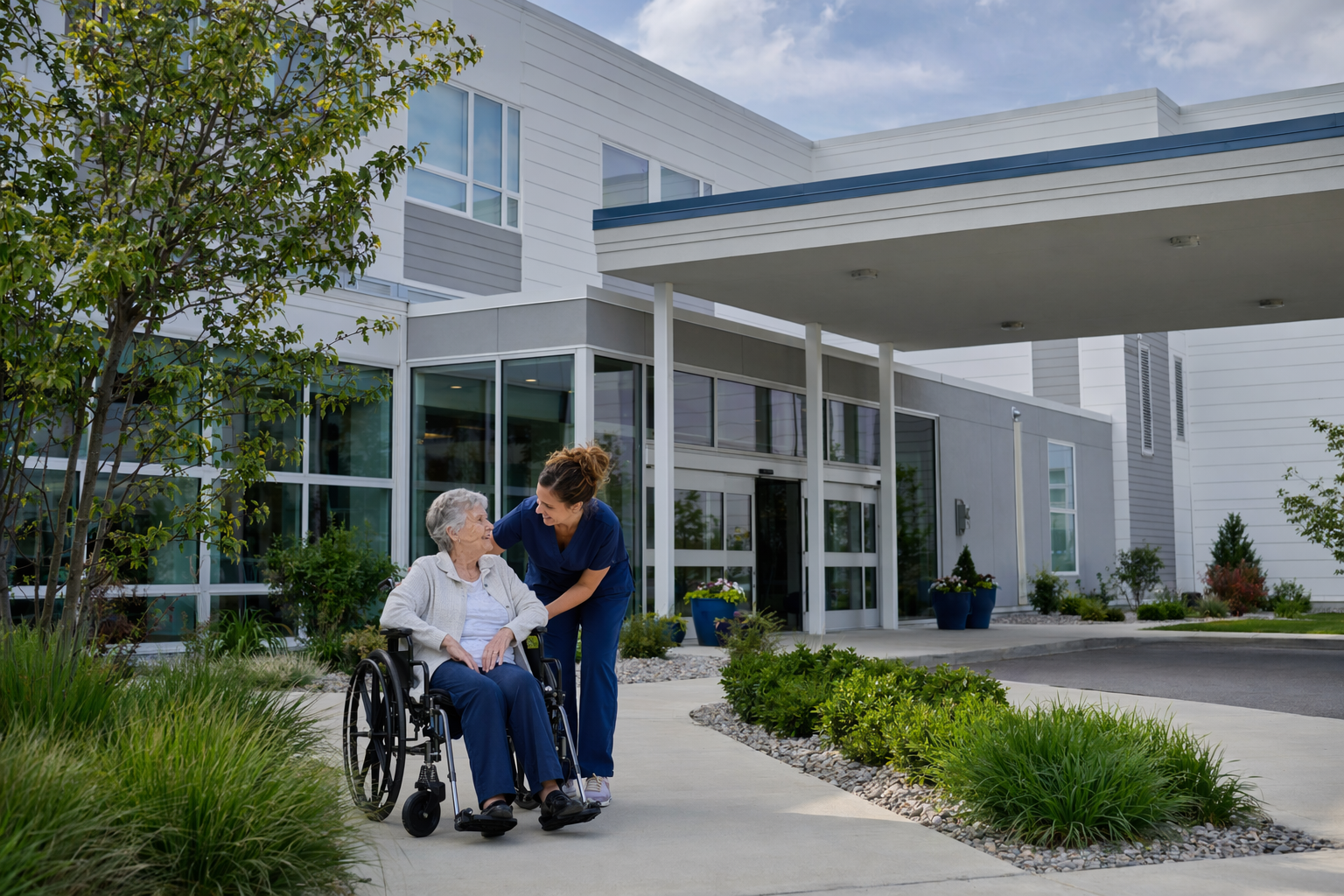
Know the difference: skilled nursing vs. long-term care
US nursing-home settings often include two main types of stays: short-term skilled care after a hospital stay, and longer-term (or ongoing) nursing-home care.
Skilled nursing (also called skilled-nursing or skilled rehab) means round-the-clock care from licensed nurses and therapy when needed. This is commonly used after surgery, a fall, or a medical complication and is intended to improve function or stabilize the condition.
Long-term care (sometimes called nursing-home care) focuses on ongoing assistance with daily activities such as bathing, dressing, toileting, and meals. The level of care needed can change over time.
When you compare facilities, ask what types of stays they offer and how they handle transitions—especially from hospital to facility—because the right fit depends on whether the goal is short-term rehab or longer-term support.
How to read the Medicare “Five-Star” rating (3 parts) and why staffing matters most
Many families use Medicare.gov’s Care Compare and notice the “Five-Star” rating. The rating is helpful, but it’s not one simple score.
The CMS Five-Star rating has three parts: (1) health inspections (how well the facility meets safety standards), (2) staffing (how many nurses and aides are available), and (3) quality measures (certain outcomes and resident care indicators). A facility can look good on one part and average on another.
Staffing is often the most telling for day-to-day care. “Staffing ratio” describes how many residents each nurse or aide supports. Also look for “RN hours” (how much time a registered nurse is available per resident per day). Higher and more consistent staffing can reduce missed care, delays, and preventable problems.
As you review ratings, also read the context. Your relative’s experience matters, and inspection findings or staffing changes over time can be important. Use the ratings as a starting point, not a guarantee.
Cost planning basics (estimates only) and what programs may cover
Costs vary widely by state, facility, room type (shared vs. private), and level of care (skilled rehab vs. long-term nursing). Without your specific details, no one can quote an exact price. Still, planning with realistic ranges can reduce surprises.
In many parts of the US, nursing-home or skilled-nursing care often falls roughly in the range of about $7,000–$13,000+ per month, with higher costs in some areas. These totals can change with therapies, care level, and payment method.
Medicare may cover certain short-term skilled care for up to 100 days after a qualifying hospital stay, but coverage depends on eligibility and medical necessity rules. Cost-sharing can apply after the initial period (for example, after day 20 in some situations). Medicaid can cover long-term nursing-home care for people who qualify based on income and assets, but rules and eligibility vary by state and can change over time.
Because coverage rules are specific, check official sources like [Medicare Care Compare] and your state Medicaid office. Northhaven Care can help you understand what questions to ask and where to look, but we don’t provide financial advice.
How to tour and what to ask (use a checklist)
A facility tour is one of the best ways to reduce uncertainty. Bring a checklist and plan to observe details. Take notes during the visit, including cleanliness, responsiveness, and whether residents look comfortable.
Ask about staffing and how care is delivered throughout the day and night. For example: How many registered nurses are on duty? What are the typical nurse-aide staffing levels? How do they handle call lights? How quickly do staff respond to needs?
Ask about clinical support for skilled care, such as therapy availability, how rehab goals are set, and how progress is communicated. If long-term care is likely, ask about assistance with daily living, meal support, and how they manage changes in health.
For guidance on choosing, use How to choose a nursing home and consider asking whether language services are available for your family member and for communication with the care team.
If you’re worried about quality or communication
It’s okay to be cautious. Quality and communication can vary even among highly rated facilities. If something feels off during a visit or after admission, document what you observe (dates, times, and who you spoke with).
Start with respectful escalation: ask for the nurse in charge, the care manager, or the unit supervisor. Ask for a clear explanation of what happened, what will change, and when you will receive updates.
You can also use official resources. The long-term-care ombudsman program investigates concerns and helps families understand their options. Medicare’s Care Compare and state inspection reports can provide additional context.
If you decide to compare more facilities, Northhaven Care can help you narrow options using public ratings and general fit. When you use Get matched, some facilities may pay a flat fee to be matched, but that does not affect our guidance or Medicaid/Medicare information.
Northhaven Care is a free service that helps immigrant families compare nursing homes using clear ratings and cost planning, and (if you choose) get matched—without giving medical, legal, or government advice.
Questions families ask
How can I tell if a nursing home is likely to have enough staff for my parent?
On Medicare Care Compare, look closely at the “staffing” part of the Five-Star rating. The most useful details are nurse and aide staffing levels and RN hours per resident per day, since staffing strongly affects day-to-day care. During a tour, ask direct questions about staffing schedules and call-light response times.
Does my family need to have a certain immigration status to qualify for skilled nursing or nursing-home help?
In general, eligibility for Medicare/Medicaid nursing-home coverage is based on specific rules related to care needs and, for Medicaid, income and assets, and it is not solely determined by immigration status. Rules can be complex and vary by state, so check official sources and your state Medicaid office. Care eligibility for services is separate from immigration status considerations.
Will Medicare pay for a nursing home stay after a hospital discharge?
Medicare may cover short-term skilled-nursing care after a qualifying hospital stay, but it depends on eligibility and medical necessity requirements. Coverage may include cost-sharing in later days, and it generally does not cover long-term custodial nursing. Confirm the details with Medicare and the facility’s billing staff using your official questions.
What should I bring to a nursing-home tour so I don’t miss important information?
Bring a written checklist: staffing questions, therapy/rehab questions, how they communicate with families, and what happens if health changes. Also bring a notepad to record what you observe about cleanliness, response to calls, and resident comfort. If you need language help, ask how translation is handled.
Keep reading
Nursing-home help for Spanish-speaking families
Nursing-home help for Spanish-speaking families — free, plain-language help comparing facili
Read more → Your situationNursing-home help for Chinese-speaking families
Nursing-home help for Chinese-speaking families — free, plain-language help comparing facili
Read more → Your situationNursing-home help for Vietnamese-speaking families
Nursing-home help for Vietnamese-speaking families — free, plain-language help comparing fac
Read more →Ready when your family is
Tell us a little about your relative's situation and we will help you find the right skilled-nursing care — at no cost to you.